
AI Product Listings for Multichannel Sellers: Write Faster Without Breaking Your Catalog
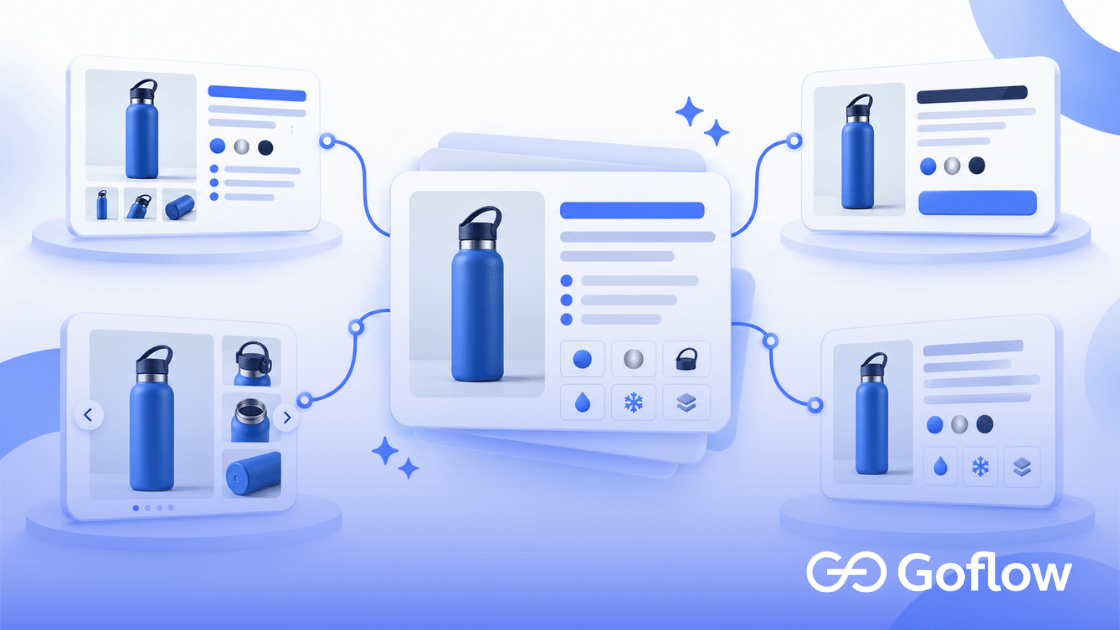
AI product listings are product titles, bullet points, descriptions, and attributes drafted by a generative AI tool instead of written line by line by your team. For multichannel sellers, they fix a real bottleneck. A catalog of 2,000 SKUs on five marketplaces adds up to 10,000 listings, and nobody has time to hand-write that many. The speed is real. The risk shows up after the copy is written.
Here's how it usually goes. A seller generates copy in one tool, pastes it into Amazon, trims it for Walmart, and rewrites it again for TikTok Shop. Six months later, the same product has four different titles, two sets of dimensions, and a spec on one channel nobody remembers changing. This guide covers how to keep the speed of AI product listings without that drift.
Why AI product listings took off so fast
Generative AI turned listing creation from a writing job into an editing job. According to Amazon's 2025 Small Business Empowerment Report, published April 30, 2026, independent sellers created more than 12 million listings with Amazon's generative AI listing tools in 2025.
Amazon isn't the only option. Plenty of marketplaces and standalone apps now offer AI-generated titles, bullets, and descriptions. For a seller launching 300 new SKUs before peak season, that can mean days of work instead of weeks.
AI also changed who reads your listings. More shoppers now ask an assistant like ChatGPT, Amazon's Rufus, or Walmart's Sparky what to buy, and those assistants build their answers from product data. Adobe's 2026 holiday forecast, released September 28, 2026, projects that traffic from AI tools to U.S. retail sites will grow 130% year over year this holiday season. When software is reading your listings for the shopper, the details have to be right, and they have to match everywhere it looks.
Where AI product listings go wrong for multichannel sellers
The writing is rarely the problem. The trouble starts when AI copy gets spread across channels by hand.
Every channel wants something different
Amazon, Walmart, Target Plus, and SHEIN each have their own title limits, required attributes, and category rules. An AI tool built into one marketplace writes for that marketplace. Copy that works on Amazon can get rejected or suppressed somewhere else, so someone edits it channel by channel. Every one of those edits is a chance for the versions to split apart.
AI gets facts wrong with confidence
Generative AI sounds just as sure of itself when it's wrong. It can round a dimension, invent a material, or borrow a feature from a similar product. If nobody checks the draft against the real product record, that mistake goes live, and on a multichannel catalog it can go live on five channels at once. Wrong specs lead to returns, bad reviews, and listing suppressions.
The content ends up in too many places
When AI copy is generated inside each marketplace's own tool, there's no single correct version. Change a product's specs, and someone has to remember every channel it's listed on. Your catalog drifts the same way inventory does: quietly, one small edit at a time.
How to scale AI product listings without breaking your catalog
You don't have to stop using AI. You have to change where the AI-drafted content lands. These five habits keep AI product listings fast and accurate:
Keep core product facts like dimensions, materials, compatibility, and case pack in one product record, and have AI write from those facts instead of a blank prompt
Draft one master title, bullet set, and description per product, then adjust length and keywords for each channel's rules
Have a person check every draft before it goes live, starting with specs and product claims
Push changes from the product record out to every channel, instead of editing listings one marketplace at a time
Audit AI-written listings on your top revenue SKUs first, then work down the long tail
The common thread is one source of truth. AI is great at producing copy. It isn't built to keep 10,000 listings in agreement with each other. That job belongs to your catalog system.
How Goflow keeps AI product listings consistent across channels
Goflow gives AI-drafted content one home. Your Goflow product catalog holds the core product information, and each channel listing is mapped to one product. Several listings across different marketplaces can point to the same product, so they share the same product data and the same inventory count.
For Amazon US, Target Plus, Macy's, and SHEIN, you can create and manage listings right inside Goflow. Titles, descriptions, and bullet features can fill in from mapped product fields, and when you update the product, the change flows to every listing mapped to it. You can also create listings in bulk for a whole group of products at once. In practice, that means you drop reviewed AI copy into the product record once and send it to every channel, instead of rewriting it in five dashboards.
Clean listings help with more than marketplace search, too. If you're getting ready for AI tools that answer questions about your business, our guide to AI-ready data covers which operational records to fix first.
Frequently asked questions about AI product listings
Q: What are AI product listings?AI product listings are titles, bullet points, descriptions, and attributes written by a generative AI tool, usually from basic product details or images. Sellers use them to create and update listings much faster than writing each one by hand. Q: How do you keep AI product listings consistent across multiple marketplaces?Store the content in one product catalog and map each channel listing back to that product, instead of pasting copy into each marketplace separately. That way, one update to the product reaches every listing tied to it. Q: Should a person review AI-generated product listings before they go live?Yes. AI can state wrong dimensions, materials, or features with total confidence. A quick review against the real product record catches those errors before they spread to every channel. |
If your AI-written copy currently lives in five marketplace dashboards, give it one home first. Book a demo to see how Goflow manages your catalog and listings across every channel from one place.