
Returns Aren't a Customer Service Problem, They're an Inventory Problem
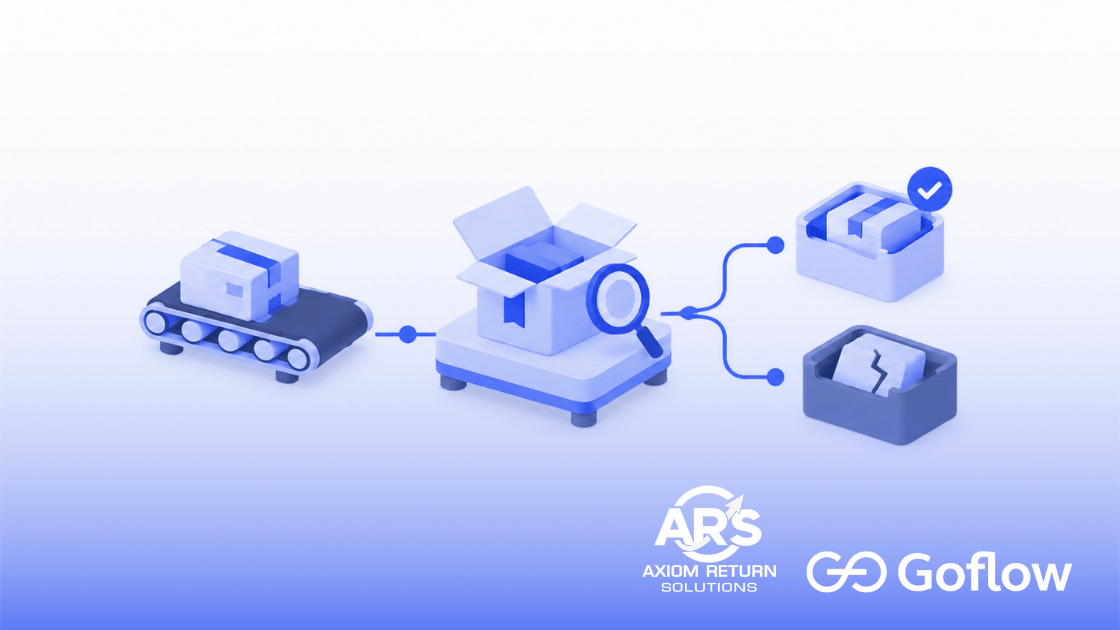
Returns are an inventory workflow, not a support ticket
Most teams route returns through customer support. That makes sense at first: a customer wants to send something back, so the team that handles customer requests takes over.
But the process rarely breaks at the support desk. It breaks in the warehouse.
You can see this clearly on Amazon, where a return can pass through several steps before the unit becomes sellable again. And if you sell on Amazon alongside Shopify, Walmart, or your own DTC site, the Amazon problem is often a preview of what is happening across the rest of your operation.
The gap between “returned” and “sellable”
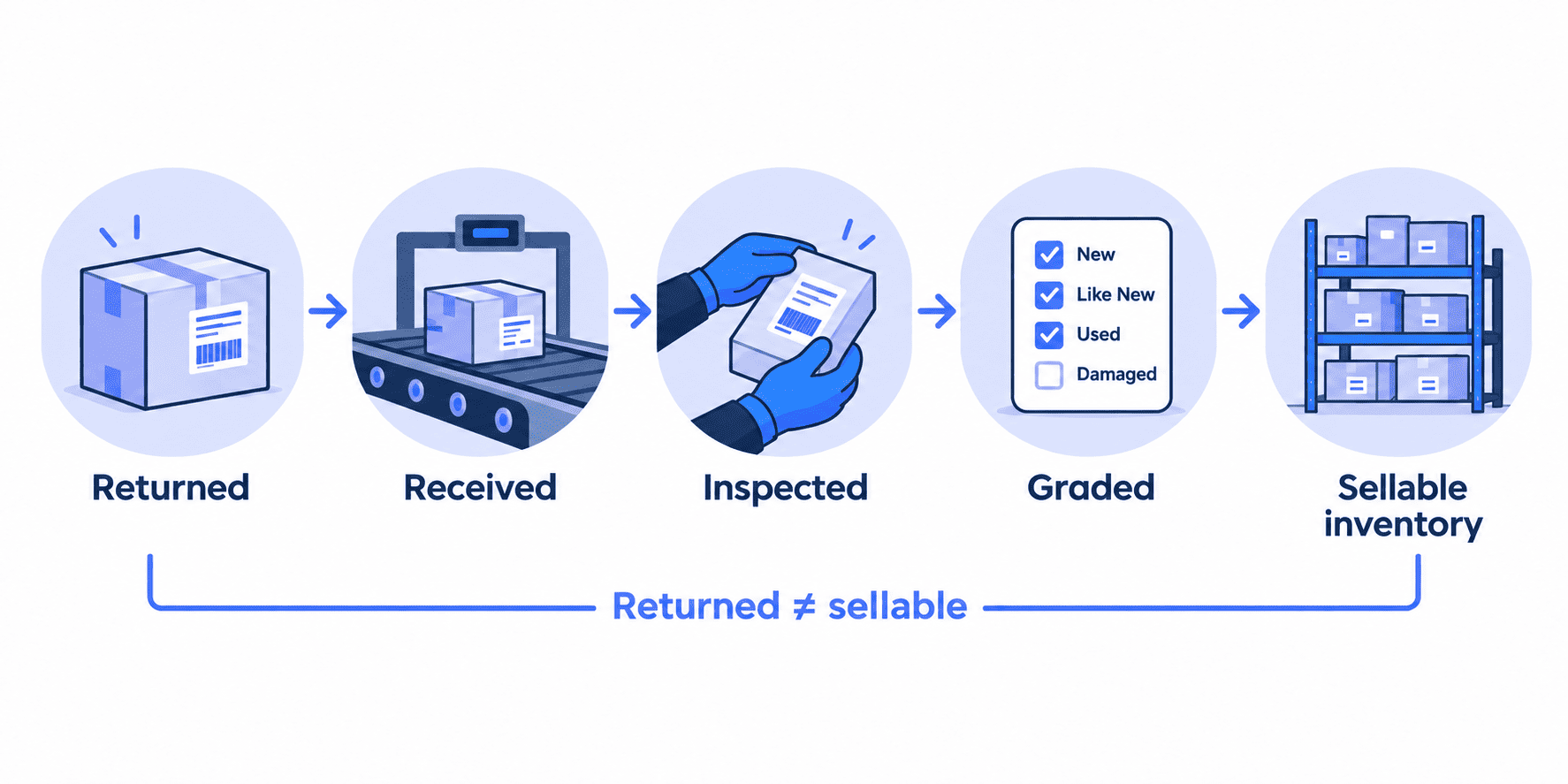 A unit does not go from sold to available the moment a customer drops it in the mail.
On Amazon, it moves through several handoffs: return transit, fulfillment-center receiving, condition inspection, and disposition. Only then is it classified as sellable, damaged, unfulfillable, or written off.
That distinction matters. Amazon’s grading may not match a seller’s standards, which is why many sellers manage returns themselves or work with a returns partner instead of relying entirely on FBA’s default process.
Multiply those handoffs across hundreds or thousands of monthly returns, and you create a widening gap between recorded inventory and physical inventory.
Inventory mismanagement already creates a significant drag on ecommerce businesses. Returns make the problem harder to detect because the missing units were not lost to a forecasting error. They may be sitting in a receiving bin, waiting for someone to inspect and disposition them.
How returns break your operation
Across the Amazon sellers we work with, the failure pattern is remarkably consistent. Multichannel sellers usually encounter the same problems elsewhere too. Amazon simply makes the process easier to examine because more status data is exposed.
You oversell inventory that is not ready. A returned unit gets counted as available before it has been received, inspected, and cleared for resale. Another customer buys it, but the unit is either not physically available or is too damaged to fulfill.
You show a false stockout. The opposite happens when a sellable unit sits in a returns or removal queue without being added back to available inventory. Your listing reaches zero even though usable stock is sitting in the warehouse. On Amazon, that can affect Buy Box eligibility. On any channel, it can cost you a sale or trigger an unnecessary reorder.
Cross-channel sync spreads the error. When a return enters through Amazon, the resulting inventory change may need to reach Shopify, Walmart, and every other connected channel. If reconciliation is delayed, each channel continues selling against an outdated quantity. The discrepancy grows with every order placed before the correction arrives. Maintaining inventory visibility across locations is already difficult. Returns introduce another inventory stream moving on a different timeline.
Disposition delays consume margin. Every day a returned unit sits ungraded is another day that capital cannot produce revenue. On Amazon, unresolved inventory may also accumulate storage costs or move toward removal. The unit is not sellable, but it has not been written off either. It can remain invisible as an operational problem until someone investigates the discrepancy or performs a physical count.
These are not customer service failures. They happen because the return is treated as complete when the refund is issued.
Operationally, a return is not complete until the unit has been restored to correctly counted, sellable inventory or formally dispositioned.
Why better support does not solve the inventory problem
A faster refund, a clearer return policy, and a better help-center article can all improve the customer experience. They do not fix the inventory logic behind oversells, false stockouts, or stranded units.
You can offer the most generous return experience in your category and still lose margin to phantom inventory. The customer conversation and the physical inventory process are connected, but they are not the same workflow.
Treat returns as an inventory workflow
A few operational changes can close the gap.
Separate “returned” from “sellable.” These must be distinct inventory states. A unit should not count toward available stock until it has been received, inspected, and cleared for resale.
Sync every disposition across every channel. When a unit becomes sellable, damaged, or written off, that change needs to reach each connected sales channel quickly. Otherwise, one channel may sell inventory that another channel no longer has.
Put a clock on disposition. Measure the time between “received” and “resolved.” Resolution might mean restocked, liquidated, returned to the vendor, refurbished, or written off. If that time increases, so does the amount of cash and warehouse space tied up in unresolved inventory.
For Amazon sellers, this also means monitoring units in unfulfillable, stranded, and removal-related statuses before they become unexpected fees or removal orders.
Track return-to-restock time as an operational KPI. Refund speed matters to the customer. Return-to-restock time affects your available inventory, fill rate, working capital, and risk of overselling.
Support should own the customer interaction. Operations should own the unit.
The reframe
Returns will always involve customer service. Someone still needs to authorize the return, answer questions, and issue the refund.
But the physical unit becomes an inventory concern as soon as it leaves the customer’s hands. That workflow continues until the product is back in sellable stock or removed from inventory for good.
Treat the return like a support ticket, and you keep addressing the customer-facing symptom.
Treat it like the inventory event it is, and you can reduce oversells, recover sellable stock faster, and close the gaps between what your systems report and what your warehouse actually holds.
Axiom Return Solutions manages the physical side of Amazon returns: inspection, grading, and disposition, so returned inventory gets back to sellable status (or written off) faster and more accurately. If your return-to-restock time feels like a black box, get in touch. Axiom is offering a free pilot on your first 100 returns.