
How to Prepare for Returns Season as a Multichannel Seller
.png)
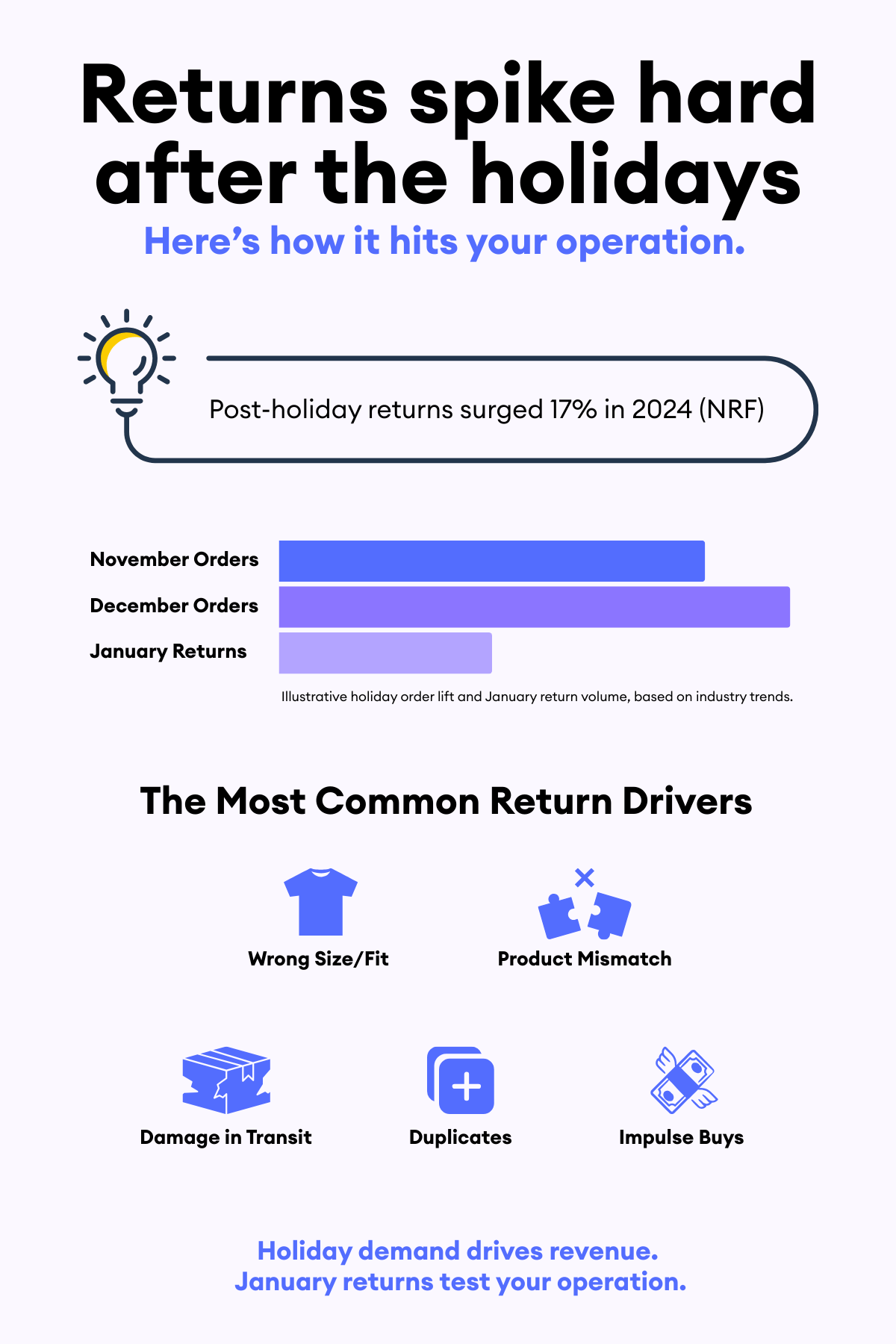
While returns happen year-round, they tend to surge right after the holiday season. In fact, according to a National Retail Federation report, retailers saw a 17% increase in returns during this period in 2024.
From gift mismatches to size issues to duplicates to impulse buys, January brings a wave of items heading back to sellers. And with that comes more customer service tickets, restocking challenges, and revenue loss.
Returns season can feel overwhelming, but with the right preparation and strategy, you can navigate it smoothly and even use it as an opportunity to strengthen customer loyalty.
In this post, we’ll walk through actionable tips to streamline your returns process, protect your margins, and set your multichannel business up for success.
7 Ways to Prepare Your Ecommerce Business for Returns Season
1. Forecast Returns and Reduce Surprises with Historical Data
Digging into returns data from previous years is one of the best ways to predict what to expect during return season. You can zoom out to look at the big picture and spot patterns by product and channel. For example, the data can tell you whether a specific category tends to have higher return rates, which will help you with future stocking decisions.
Looking at the data can also help you identify recurring reasons for returns, such as sizing issues, damage, or shipping problems. You can even add a simple one-question survey during the return process so that you can gather even more insights.
To collect this data easily, it helps to use a multichannel operating system (MCOS) that tracks returns by SKU and channel automatically. Manual tracking is possible, but an MCOS brings everything together in one place, improving both your returns preparation and the efficiency of your entire operation.
Want a deeper dive into forecasting? Check out our post: Inventory Forecasting Guide: How to Predict Demand.
2. Prevent Returns By Improving Your Product Descriptions
Many returns happen because the product a customer receives is different from what they expected. Clear, accurate product descriptions help close that gap. When shoppers have all the information they need upfront, they’re far more likely to be happy when they receive their purchase.
Provide detailed information, such as photos, measurements, specs, materials, and size guides, to paint a complete picture. You can also improve product descriptions by adding lifestyle images, comparison charts, or sizing notes based on real customer feedback.
The more information you add, the more you’ll reduce confusion and set the right expectations, making sure customers aren’t surprised (or disappointed) when the item arrives. Thoughtful product descriptions don’t just prevent returns, they improve the entire buying experience.
Example: Imagine you’re selling a women’s puffer jacket that runs small in the shoulders. Your product description lists the materials and shows great photos, but it doesn’t include a detailed sizing chart with exact measurements. A customer orders her usual size, only to find it tight across the shoulders and chest.
Even though the jacket is high-quality, the lack of clear sizing guidance leads to frustration and an unnecessary return, leaving the customer disappointed and the seller with extra processing work. Adding simple clarifications like “runs small, consider sizing up” or including shoulder and chest measurements, along with a brief note on fit, could prevent these returns entirely and help customers feel confident in their purchase.
3. Create Clear, Consistent, and Customer-Friendly Return Policies
A good return policy will help build trust and reduce friction during one of the most sensitive parts of the customer journey. Make sure your policies are clearly communicated across all sales channels, while still allowing for minor adjustments where needed. Write everything in plain language so customers know exactly what to expect.
Here’s what every return policy should include:
A clear explanation of how to start a return
What’s eligible for return and in what condition
The expected timeline for refunds or exchanges
Whether shipping costs are covered and how labels are provided
How exchanges, store credit, or replacements work
Any restocking fees, exceptions, or special conditions customers should know about
Also, if possible, consider covering return shipping. Major retailers like Amazon have set the expectation for free returns, and meeting that expectation can go a long way toward improving customer satisfaction.
4. Prep Your Inventory and Warehouse for a Smoother Returns Process
Preparing your warehouse for an influx of returned items can save time and make things a lot easier to handle when returns reason comes around. A few operational steps can make a big difference during peak periods:
For example, to prep your warehouse for returns, you can:
Map out workflows for inspecting, restocking, refurbishing, or recycling returned items
Ensure your labeling and scanning systems support fast routing and minimal bottlenecks
Set aside dedicated space for incoming returns so your team can sort and evaluate items quickly.
Prepare dedicated packing materials for returned items
Train staff on inspection standards to quickly identify restockable versus non-restockable items
Organizing these processes ahead of time will speed up turnaround times and make sure returned goods are reintegrated into inventory (or processed out) as efficiently as possible.
5. Take Control with the Right Tools
Having the right toolkit on your side can significantly reduce the stress and workload of returns season. A multichannel operating system like Goflow brings all your sales channels together, allowing you to track returns in one centralized place.
A multichannel operating system (MCOS) will help you:
Automate workflow to speed up refunds and reduce manual work
View real‑time inventory updates to prevent overselling and stock inaccuracies
Gather unified data and keep information consistent across marketplaces, shipping tools, and accounting systems
Let’s say, for example, a mid-sized online retailer struggles every January with returns scattered across different marketplaces, spreadsheets, and warehouses. Staff are stressed, items are misplaced, and refunds take longer than they should.
By implementing Goflow, this retailer could ensure that all returns are tracked in one place, workflows are automated, and inventory updates happen in real time. The same team could handle twice the returns with less stress and fewer errors, transforming returns season from chaos into a streamlined, manageable process.
With these pieces connected automatically, you can focus on making informed decisions rather than chasing details across multiple dashboards. Better visibility means better efficiency, especially during a high‑volume season.
6. Keep Customers In the Loop
Let’s face it, when customers need to return an item, they will already be annoyed about the inconvenience. The best way to turn this potentially negative moment into a trust-building experience is to make them feel listened to and cared for throughout the process.
In addition to providing customers with clear instructions on how to return their items and what steps are involved, it’s also important to keep them updated on the status of their return as it is being processed. Let them know how long each stage should take, with updates along the way so they’re never left wondering, “Now what?”
Automated email or SMS updates help customers feel informed without increasing pressure on your support team. Setting expectations around timelines and confirming each stage of the process reassures customers, so they know the problem is being solved, not ignored.
With great communication, your customers will feel supported, which means they’re far more likely to shop with you again, even after making a return. Always thank them for their feedback and use those insights to strengthen your products and listings.
7. Review, Learn, and Improve for Next Season
Once the dust settles, take time to assess how your returns season played out. Look at return rates, refund costs, common product issues, and any operational bottlenecks that slowed things down. Use these insights to update product descriptions, refine sizing guides, or improve packaging.
Setting up dashboards in Goflow ensures you have year-round visibility into key metrics, which helps you prepare proactively for the next returns cycle. Continuous learning and optimization mean smoother operations and fewer surprises every season, which is the key to building the stable foundation of a sustainable, scalable ecommerce business.
Not sure what to track? Read our guide: Inventory Management KPIs Every Ecommerce Seller Should Track.
Conclusion: Less Chaos, More Control
Returns season doesn’t have to be a scramble. With smart preparation, clear workflows, and the right tools, you can deliver a better customer experience and keep your operations running smoothly.
Ready to take the stress out of returns season? With Goflow, you can track returns across all your sales channels, automate the return process, and keep your inventory accurate in real time, so you stay in control, no matter how busy it gets.
Join Goflow Core for free and see how Goflow can help your multichannel business breeze through returns season with ease.